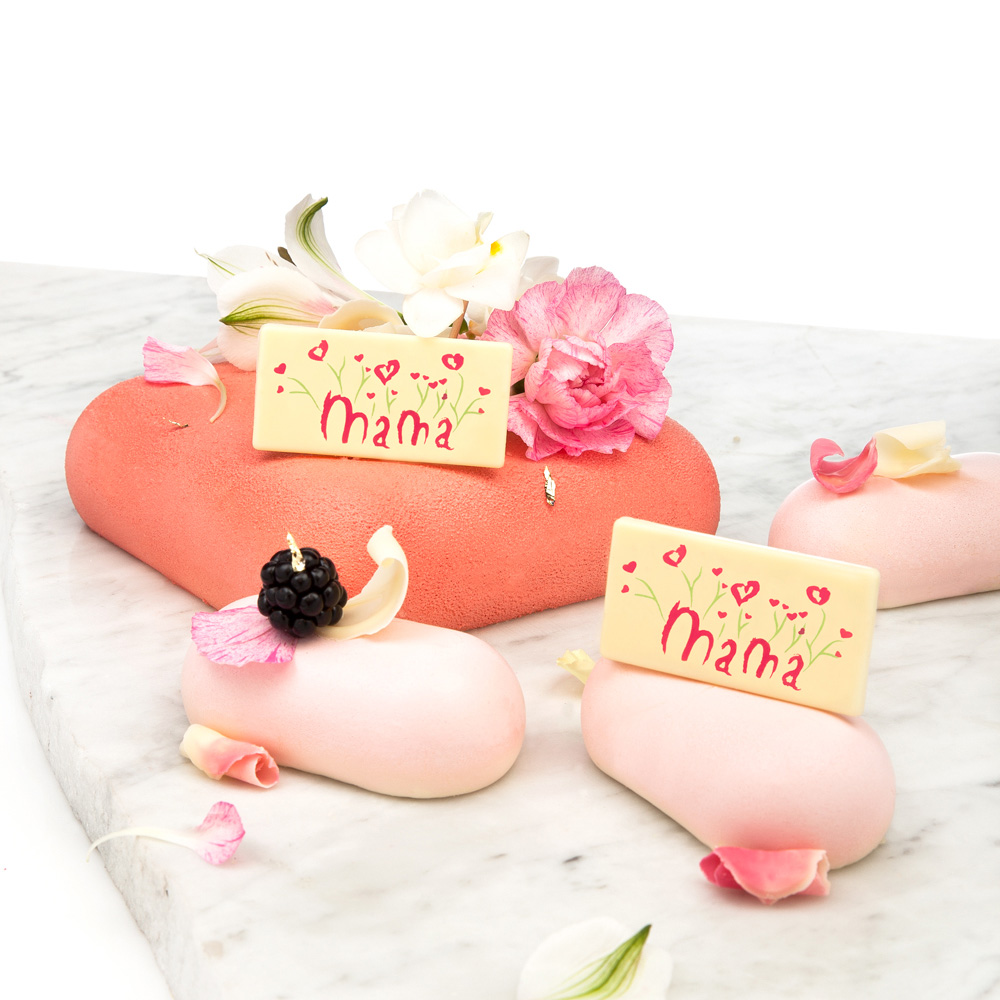


Finishing a cake is one of the most important stages in a pastry chef’s work. It is this final step that creates the first impression and defines the dessert’s visual appeal. Professionals reach for velly spray for cakes, which is also known as velour spray, suede spray orvelvet spray – to achieve an elegant, soft-touch finish on cakes and desserts, more frequently than ever before.
In this article, we explain how to apply velly spray to a cake, guide you through the process step by step, and show how to avoid the most common mistakes when velveting desserts — both in artisanal pâtisserie and in professional-scale production.
What Is Edible Velly Spray and What Is It Used For?
Edible velly spray is a professional decorative product formulated primarily from cocoa butter, with the addition of food colourings. When applied to a frozen surface, it creates a distinctive matte coating with a velvety texture, commonly referred to in the industry as the velour or velvet effect.
This solution is widely used in modern artistic pastry-making as well as in the B2B sector — including pastry workshops, hotels and catering centres — where visual consistency, refined aesthetics and a premium finish are essential.
Velly spray is designed to be applied to frozen surfaces, such as mousses, creams, ice cream, sugar paste, marzipan and chocolate, making it a highly versatile solution for finishing a wide range of desserts.
Tip: Velly spray does not require heating, provided it is stored and used at room temperature.
Velly Spray – How to Use It? Application Basics
If you are wondering how to use velly spray, three factors are crucial: surface temperature, spraying distance, and application technique. Together, they determine whether the final finish is even, refined and truly professional.
Preparing the Cake Before Applying Velvet – Temperature and Type of Coating
When velveting a cake, the surface must be properly chilled. Velly spray is best applied to frozen desserts at a temperature of approximately –10°C or below. At this temperature, the cocoa butter in the spray crystallises instantly on contact, creating the characteristic soft, velvety suede effect.
Velly spray for cakes works particularly well on:
- mousses and creams,
- sugar paste (fondant),
- marzipan,
- chocolate and modelling chocolate,
- ice cream, semifreddo, and frozen desserts,
- chocolate glazes and ganache (once properly chilled).
How to Apply Velly Spray to achieve an Even Layer
A proven application method includes the following steps:
- shake the spray vigorously for approx. 20 seconds before use,
- spray from a distance of 20–30 cm,
- apply only to frozen surfaces (approx. –10°C),
- after spraying, leave the dessert to defrost.
While applying velly spray to a cake, use smooth, continuous movements and avoid holding the spray in one place. This technique helps prevent streaking or patchiness and ensures a uniform, consistent texture across the entire surface.
The Most Common Mistakes When Velveting Cakes – and How to Avoid Them
When working with velly spray, the most common issues include:
- applying it to a surface that is not cold enough,
- spraying too close to the cake,
- applying an excessively thick layer,
- insufficient shaking of the can before use,
- an uneven dessert surface – which may cause the velour layer to crack.
Any of these mistakes can disrupt the velour effect and result in a non-uniform finish.
Uses of Velly Spray – Opportunities for Pastry Chefs
Edible velvet spray has a very wide range of applications:
- coating cakes, pastries, and individual portions based on mousses and creams,
- creating a velvety finish on cakes covered with sugar paste, marzipan, or modelling chocolate,
- achieving a suede effect on chocolate elements (figures, decorations, bars, pralines),
- finishing details made of marzipan and sugar paste (flowers, figurines),
- adding an eye-catching finish to ice cream and frozen desserts.
Examples of Cakes and Desserts with a Velvet Finish – Inspiration for Pastry Chef
The velly spray effect perfectly highlights modern shapes and themed creations, such as:
Each of these creations demonstrates how an elegant velvety finish enhances the perception of form, texture and overall refinement.
Colours and Types of Edible Velly Spray
Barima Artisanal velly sprays are available in a wide colour palette, including:
powder pink, pink, grey, fuchsia, red, white, black, yellow, orange, green, light green, light blue, purple, and brown.
This wide range makes it easy to match velly spray to the season, theme or overall design concept of a dessert.
Alternatives to Velly Spray
In professional pastry work, it is also worth considering the use of:
- pearly spray – for a subtle sheen,
- glitter pump powders – for decorative accents,
- spray glaze – for a glossy effect and surface protection.
How to Store Velly Spray and Maintain Its Quality
To ensure that edible velly spray retains its properties:
- store it at room temperature,
- keep it away from direct heat sources,
- after use, clean the nozzle by spraying the can upside down.
Product details:
- Packaging: 250 ml
- Result: a soft, velvety suede (velour) effect on dessert surfaces
Summary
Edible velly spray is a product that allows pastry chefs to elevate the visual appeal of cakes and desserts with ease. Thanks to its simple application, wide range of uses and distinctive velvety finish, velly spray has become an integral part of work at a modern professional pâtisserie.
A solid understanding of the principles of it use — from correct surface preparation to proper spraying technique — ensures that velveting is not only visually impressive but also consistent and efficient in B2B production. It is a solution that offers pastry chefs genuine creative freedom, enabling them to consciously shape texture, colour and the overall character of a dessert.
FAQ
What temperature should the surface of a dessert be for velly spray to create a perfect velour effect?
The dessert should be frozen, but not blast-frozen. The optimum surface temperature is between -5°C and -15°C.
How can cracking of the velvet coating be prevented?
The most common cause of cracking is a layer of crystallised water (frost) on the surface being sprayed. Other causes include applying the velly spray too thickly or coating an uneven dessert surface. Apply a thin layer and make sure the dessert is free from frost before spraying. Desserts should also be free from mechanical damage and cavities left by air bubbles.
From what distance should velly spray be applied to achieve an even coating?
Velly spray should be applied from a distance of 20-30 cm.
How many monoportions can be coated with one can of velly spray?
There is no single answer, as several factors affect coverage: the shape and size of the monoportions, how they are arranged on the tray and the spraying technique itself.
Why does a velvet coating crack on desserts?
The most common cause is a layer of crystallised water (frost) on the coated surface. Other causes include applying the velly spray too thickly or coating an uneven dessert surface.