

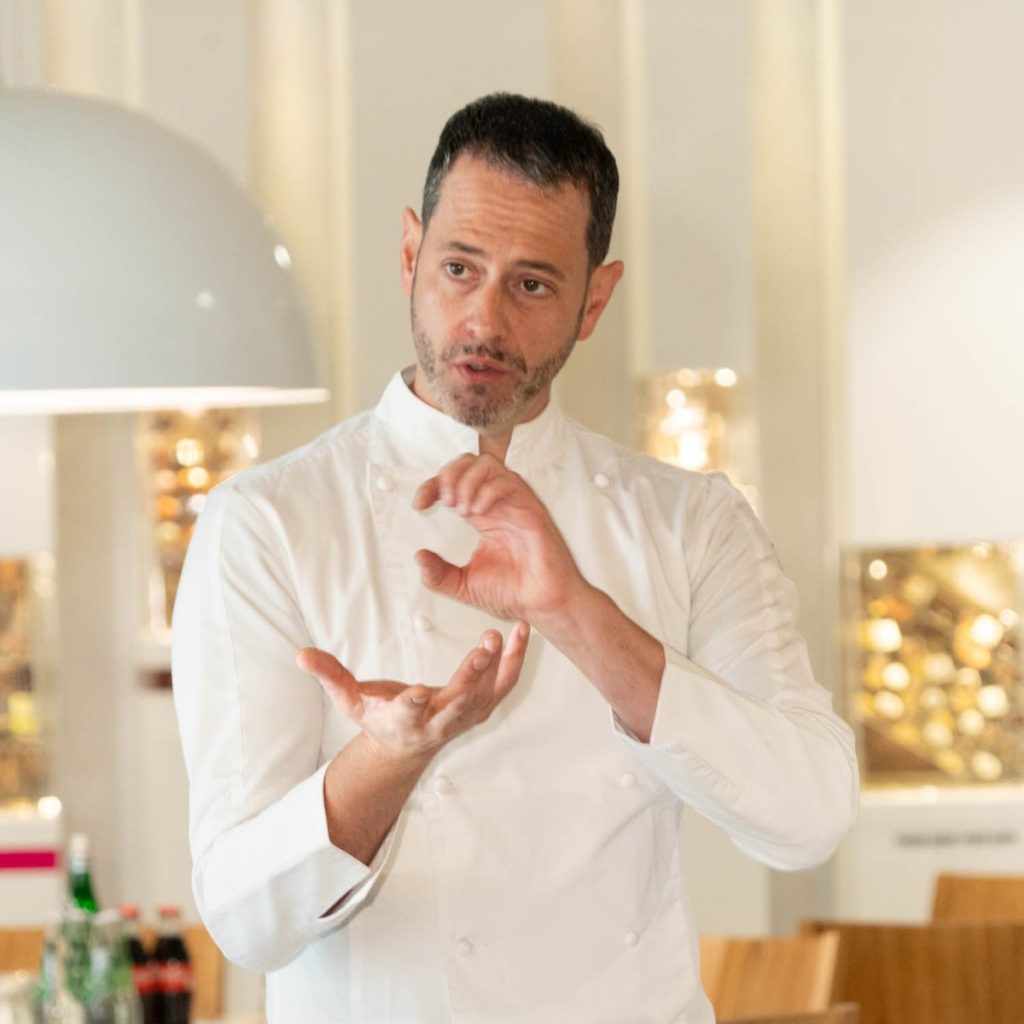
On 13 and 14 October 2026, the Academy of Skills Inspiration hosted Gregory Doyen, a French pastry chef, consultant and trainer. Over two days, participants followed the making of eight signature desserts: from bases and individual layers, through pairing flavours and textures, to assembly, glazing and decoration.
The programme showed how to retain the recognisable flavour of a classic dessert while changing its structure and form. From the perspective of a professional pastry kitchen, the key points were the function of each component, the contrast between creamy and crunchy layers, and the way the finish followed from the construction of the dessert.
Gregory Doyen has worked for many years as an international consultant and runs training courses for professionals. He has also created pieces for Louis Vuitton, Cartier, Dior and Chanel. In his signature desserts, he combines classic techniques with a precise, often geometric form.
From bases to the finished dessert
The programme covered chocolate mousses, ganache montée, fruit coulis and compotes, creamy crémeux, crunchy praline layers and glazes. The entire workflow mattered: preparing the bases, building structures, pairing flavours, assembly and the final finish.
The same types of components appeared in different formats: individual desserts, tarts and a roulade. This allowed participants to look at technique more broadly than through the lens of a single recipe. A sponge, a sweet pastry base, a mousse, a fruit insert or a praline took on a different role depending on the construction of each dessert.
Classic flavours in a new form
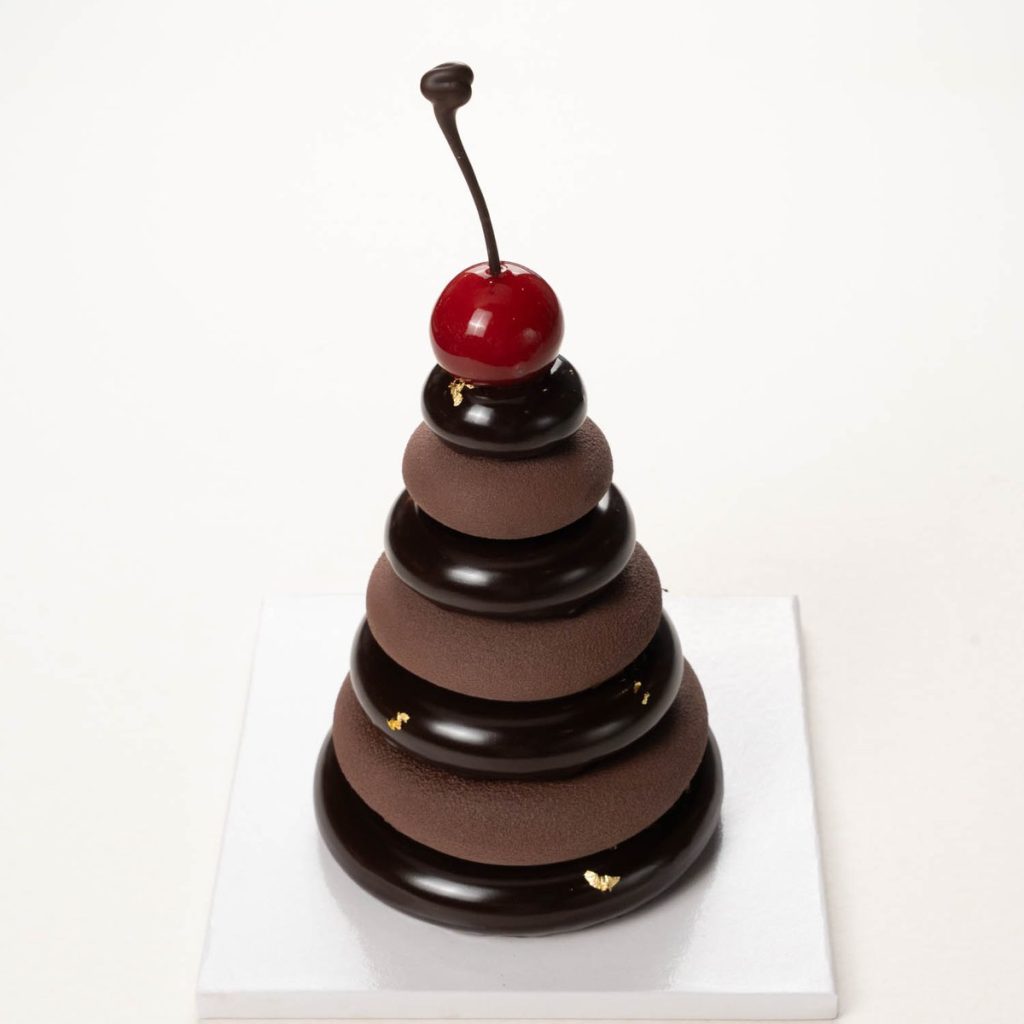
Black Forest kept the combination of chocolate, griotte cherries and vanilla. A vanilla ganache montée completed the familiar flavour profile, while the new form and layer structure changed the way it was presented. This example showed that refreshing a classic does not have to mean giving up its most recognisable elements.
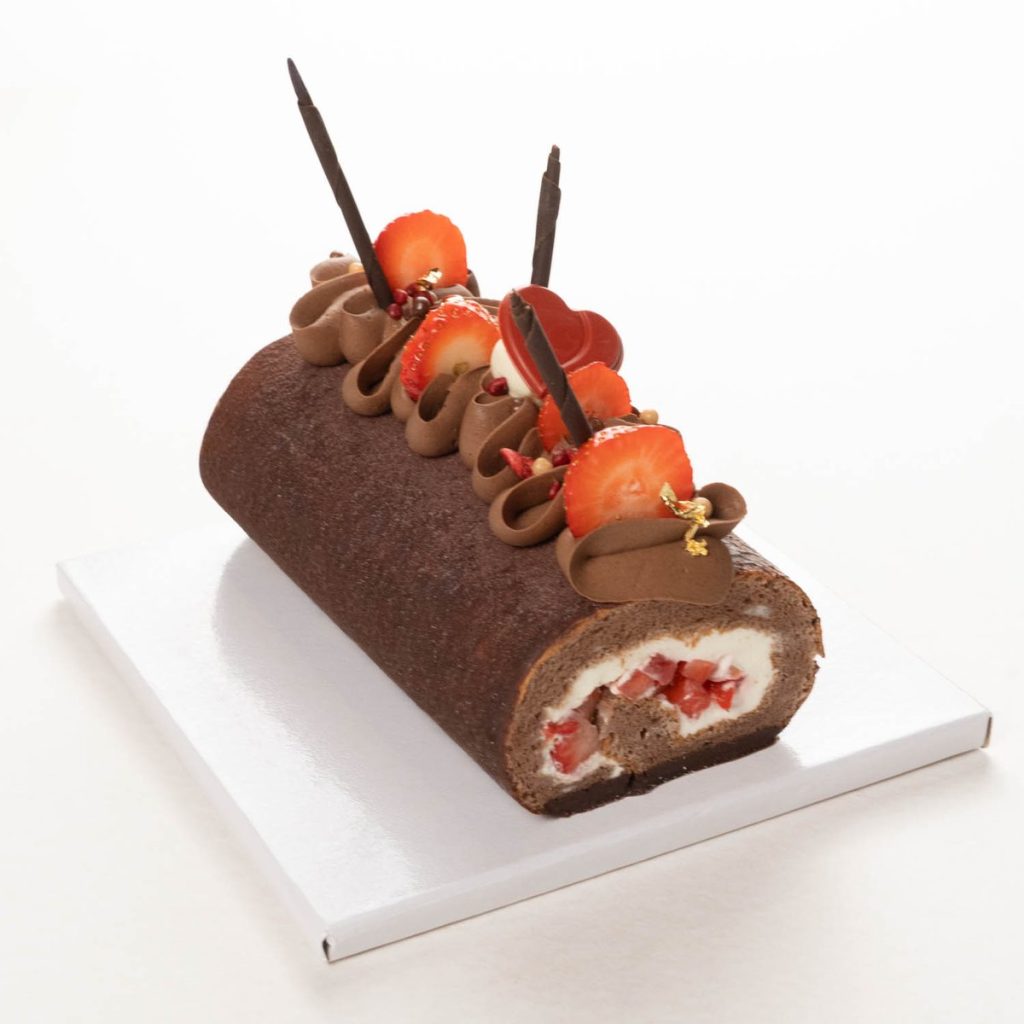
The chocolate roulade with strawberries was based on a light chocolate sponge, dark chocolate ganache montée and fresh strawberries. Chocolate decorations completed the composition, but its foundation remained the clear structure of sponge, cream and fruit. The roulade showed how to preserve this structure within a familiar dessert format.
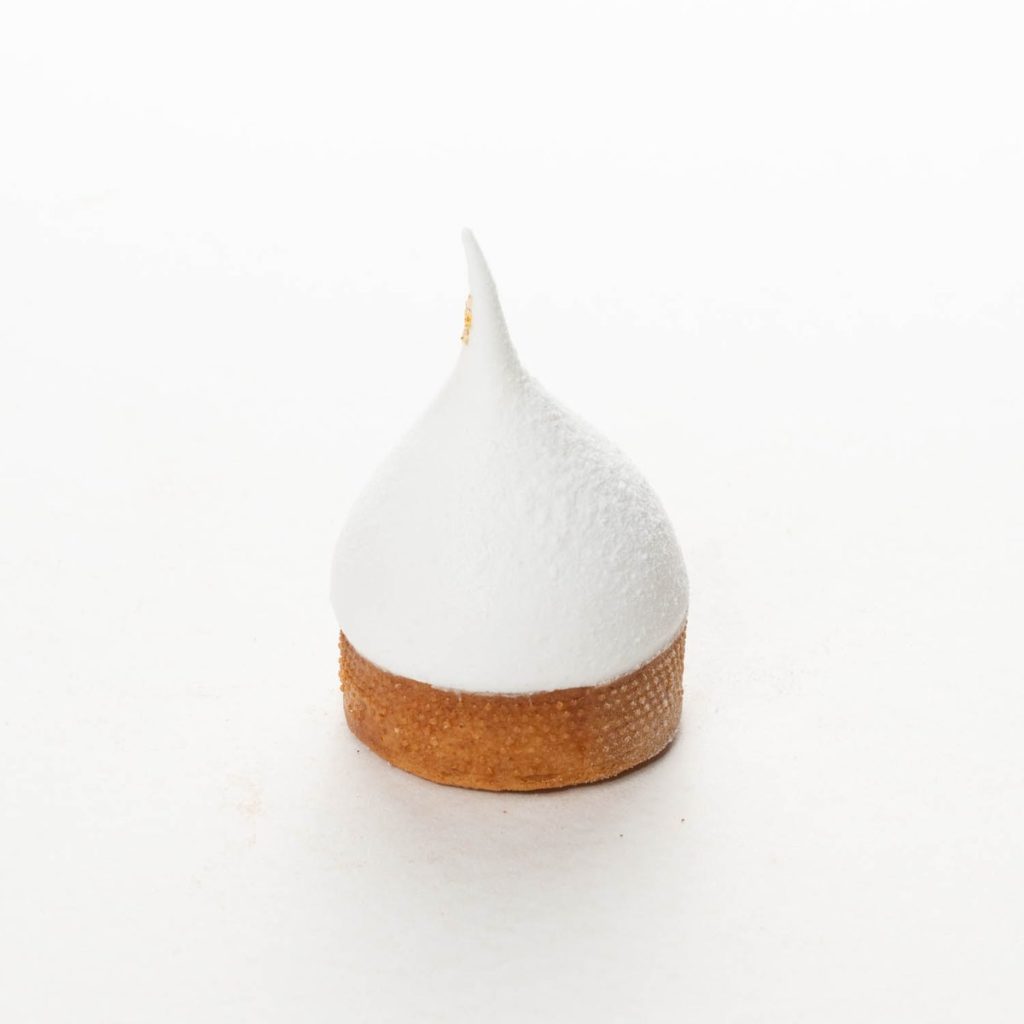
The lemon tart combined sweet pastry, a roasted hazelnut cream, lemon crémeux and marshmallow. A single dessert brought together a crisp base, a creamy filling and a soft finish. The familiar flavour of a lemon tart was developed primarily through a contrast of textures.
Balancing chocolate, fruit and texture
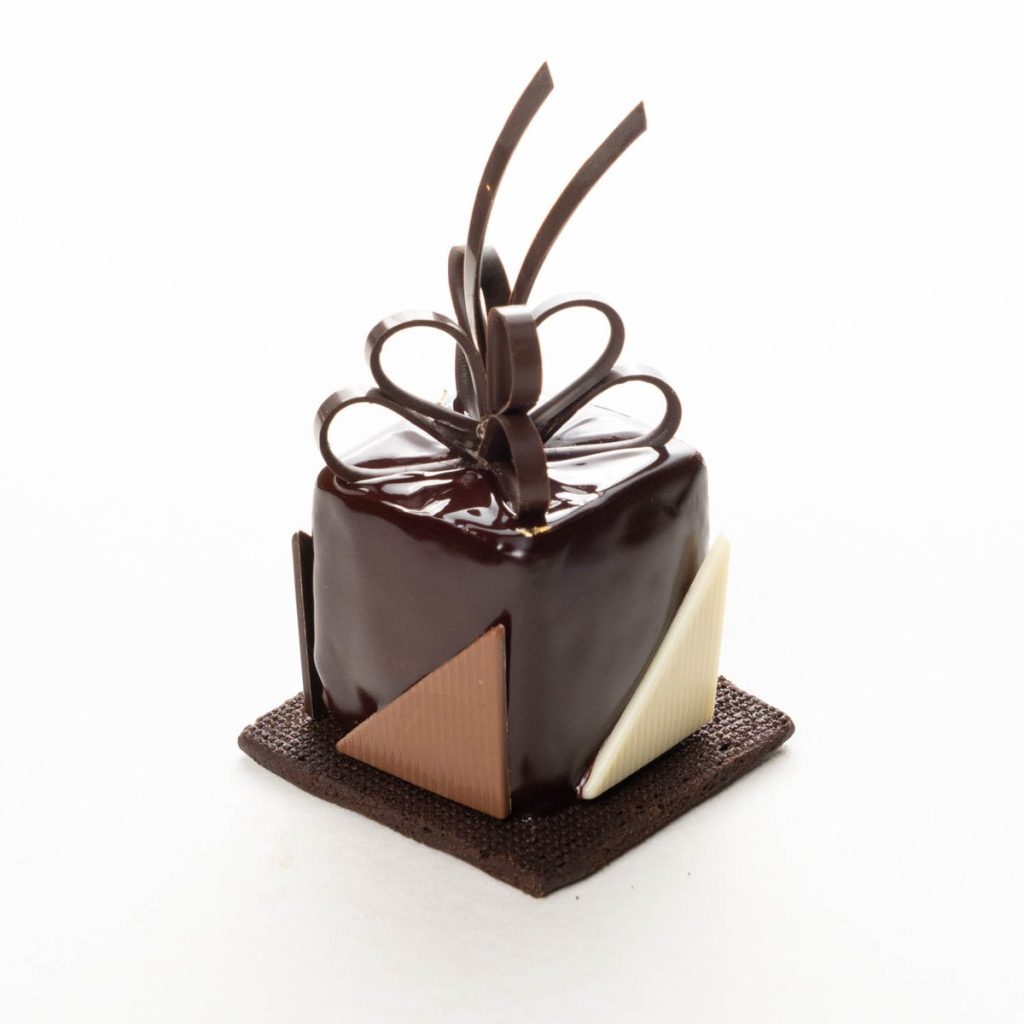
Cadeau (French for ‘gift’) caught the eye with its form, but its construction relied on a clear pairing of milk chocolate, crunchy praline and a mandarin and mango coulis. The fruit layer added a contrasting flavour note, while the praline broke up the creamy elements with texture.
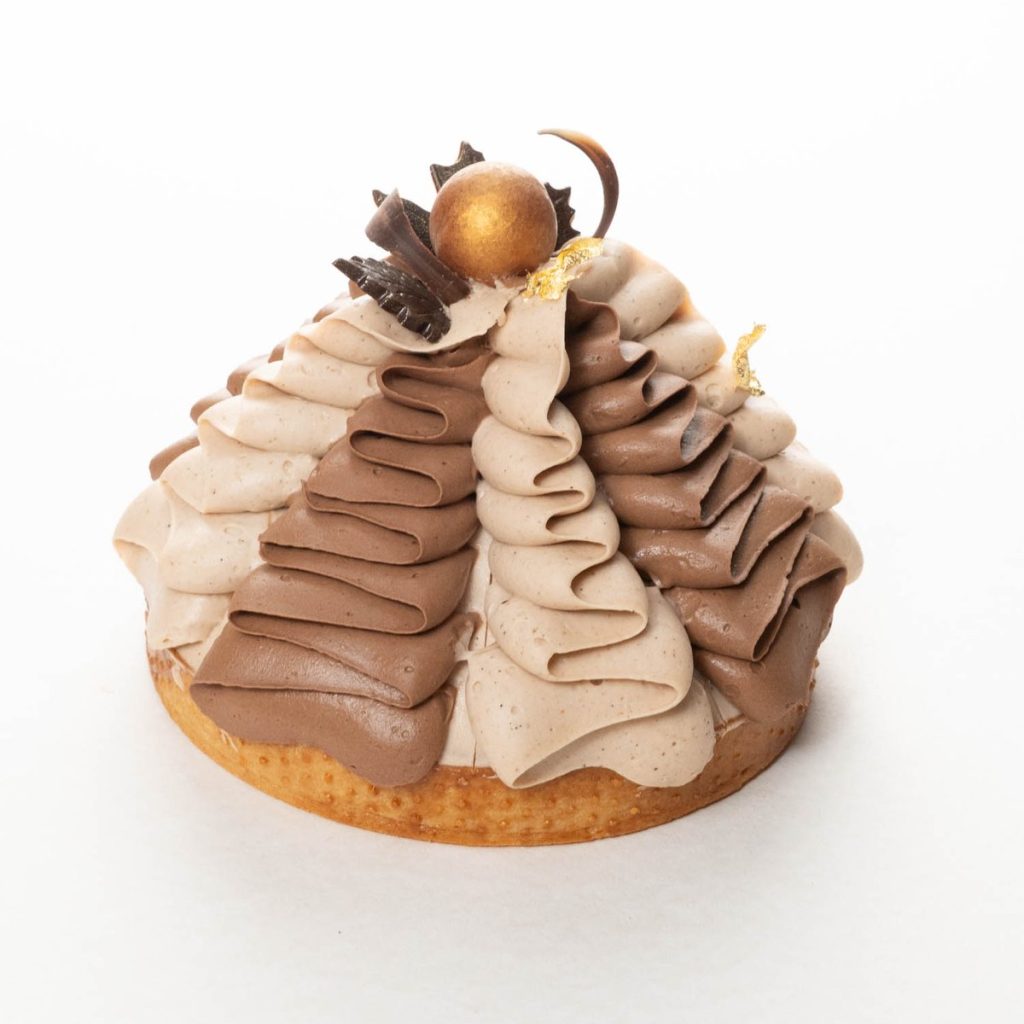
The chestnut tart combined chestnut, vanilla chantilly and roasted hazelnuts. Blueberries and blackcurrant introduced a separate fruit layer. The combination showed how to separate creamy, roasted and fruity notes within a single tart, rather than building the whole dessert around one dominant sensation.
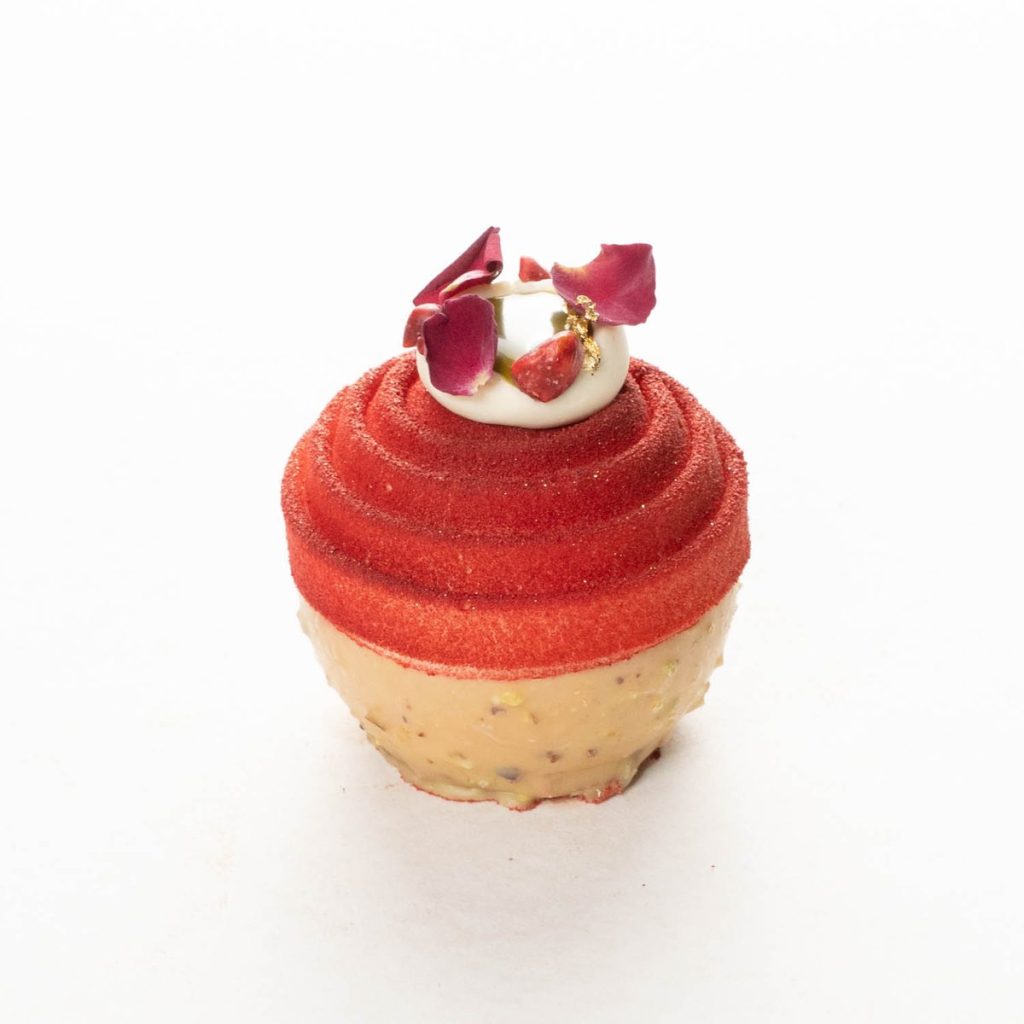
Equinox combined a pistachio sponge, praline, white chocolate mousse and raspberry coulis. Each element contributed a different flavour or texture: pistachio and praline formed the nutty part, the mousse created a creamy layer and raspberry added a distinct fruit component.
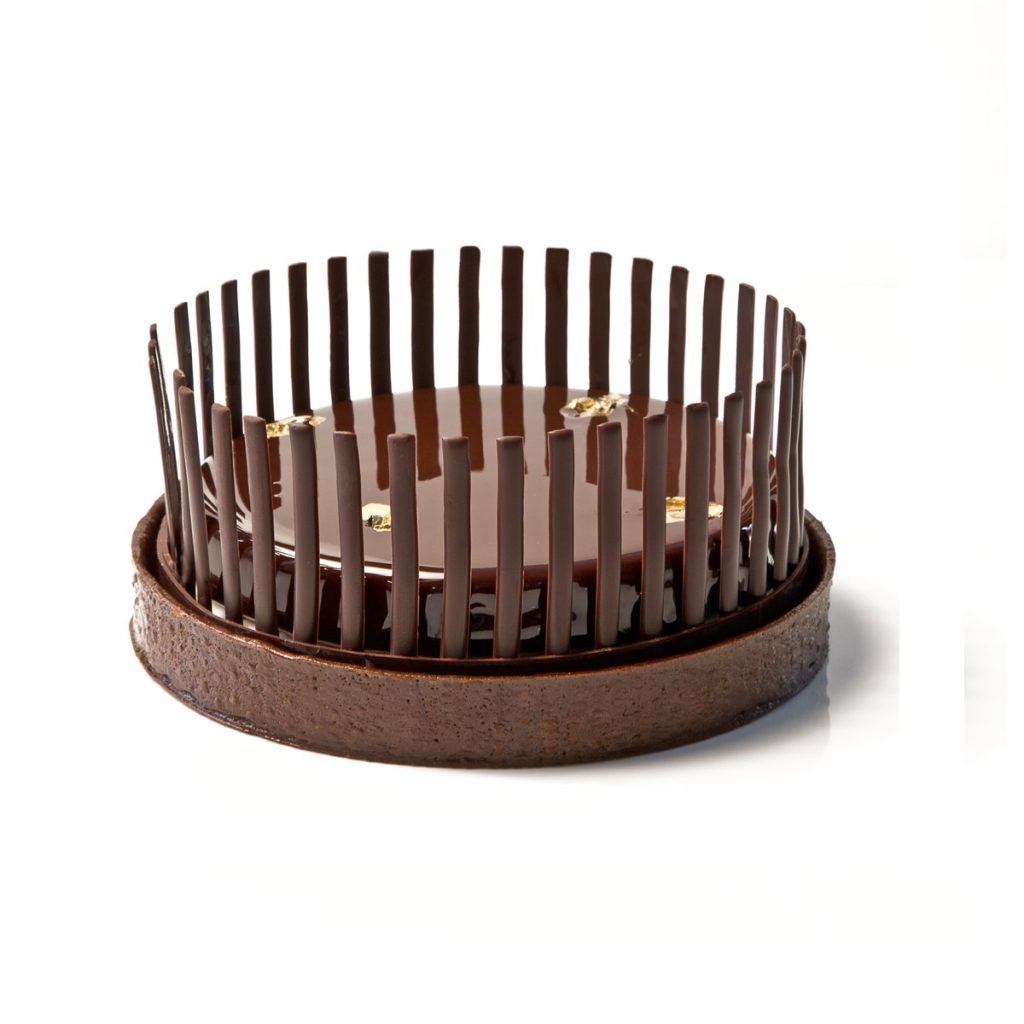
Coffee Crown was built from cocoa sweet pastry, nut praline and chocolate-coffee creams. In this creation, cocoa, coffee and nuts formed a shared dominant flavour, while the geometric finish gave order to a multi-component construction.
Form as part of the recipe
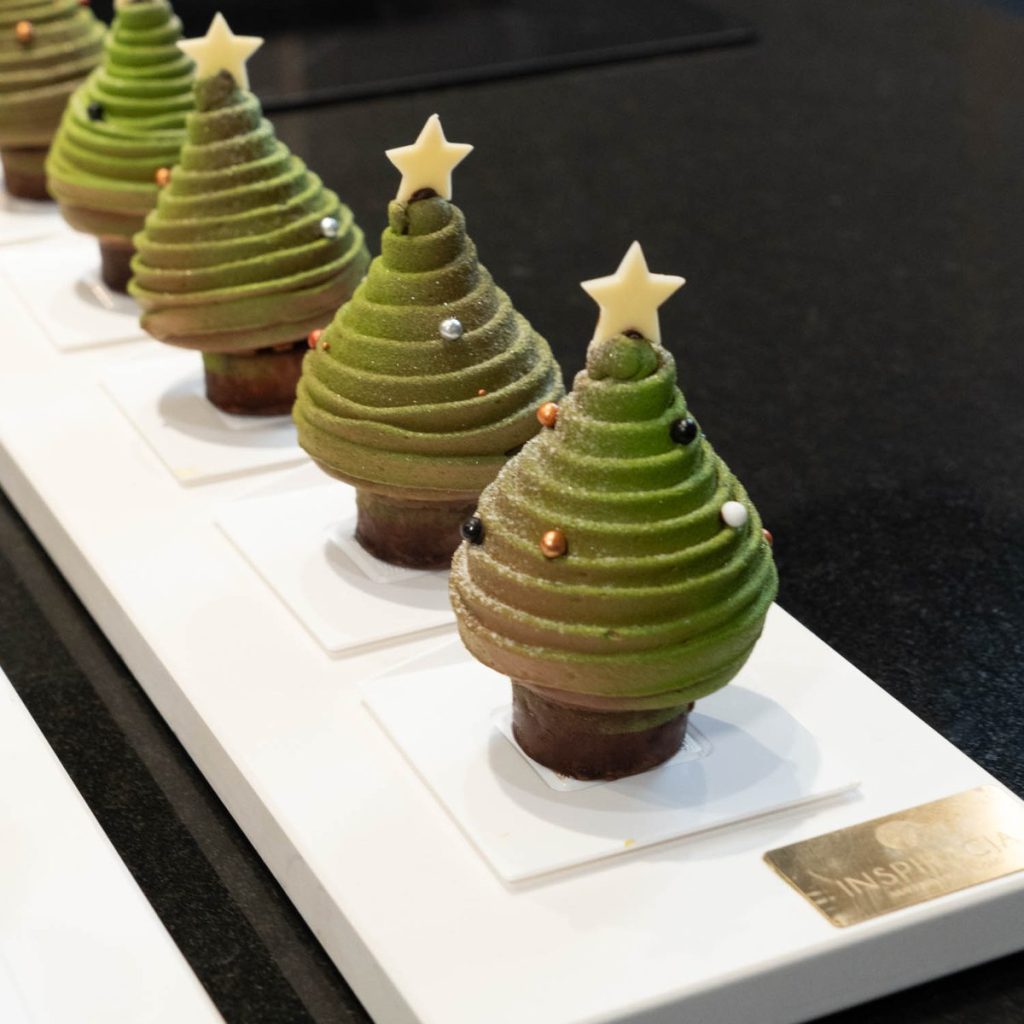
The programme closed with The Tree, an individual dessert inspired by the festive season. Chocolate brownie, praline crunch, milk chocolate mousse and citrus accents were brought together in a decorative form. The shape was not an incidental addition to a finished dessert, but part of the overall concept.
A similar approach was evident in Cadeau and Coffee Crown. The chocolate finish, geometric shape and decorations required consistency between the layers and the final appearance. The course served as a reminder that a dessert’s presentation is worth considering together with flavour and texture, rather than only at the very end of the process.
Takeaways for the professional pastry kitchen
- Every layer should have a defined function. In the desserts prepared, a baked or crisp element formed the base, a mousse or cream built the creamy part, fruit added a distinct accent, and praline or roasted nuts provided textural contrast.
- A classic can remain recognisable even in a new form. The Black Forest, the roulade and the lemon tart retained their recognisable flavour profiles, but were developed through new layers, consistencies and ways of presentation.
- Textural contrast brings clarity to a multi-component dessert. Crisp bases, praline crunch, mousses, ganache and crémeux did not repeat the same function. They were combined so that each successive layer differed in texture.
- The finish should follow from the construction of the product. This applies in particular to geometric shapes, smooth surfaces and chocolate decorations. This principle can be applied to individual desserts, tarts, roulades and seasonal desserts.
The eight creations differed in form and flavour pairings, but they shared a consistent logic: every component contributed flavour, texture or an element of the finish. It is this way of thinking that is easiest to carry over into everyday work on a new recipe.
Acknowledgements
We would like to thank Gregory Doyen for sharing his knowledge, experience and personal approach to his craft, and all participants for their attendance and commitment. Throughout both days of the course, Gregory was supported by the Academy of Skills Inspiration pastry chefs Michał Świerad and Ana Florencia Dávila.
We look forward to seeing you at future courses at the Academy of Skills Inspiration.


