

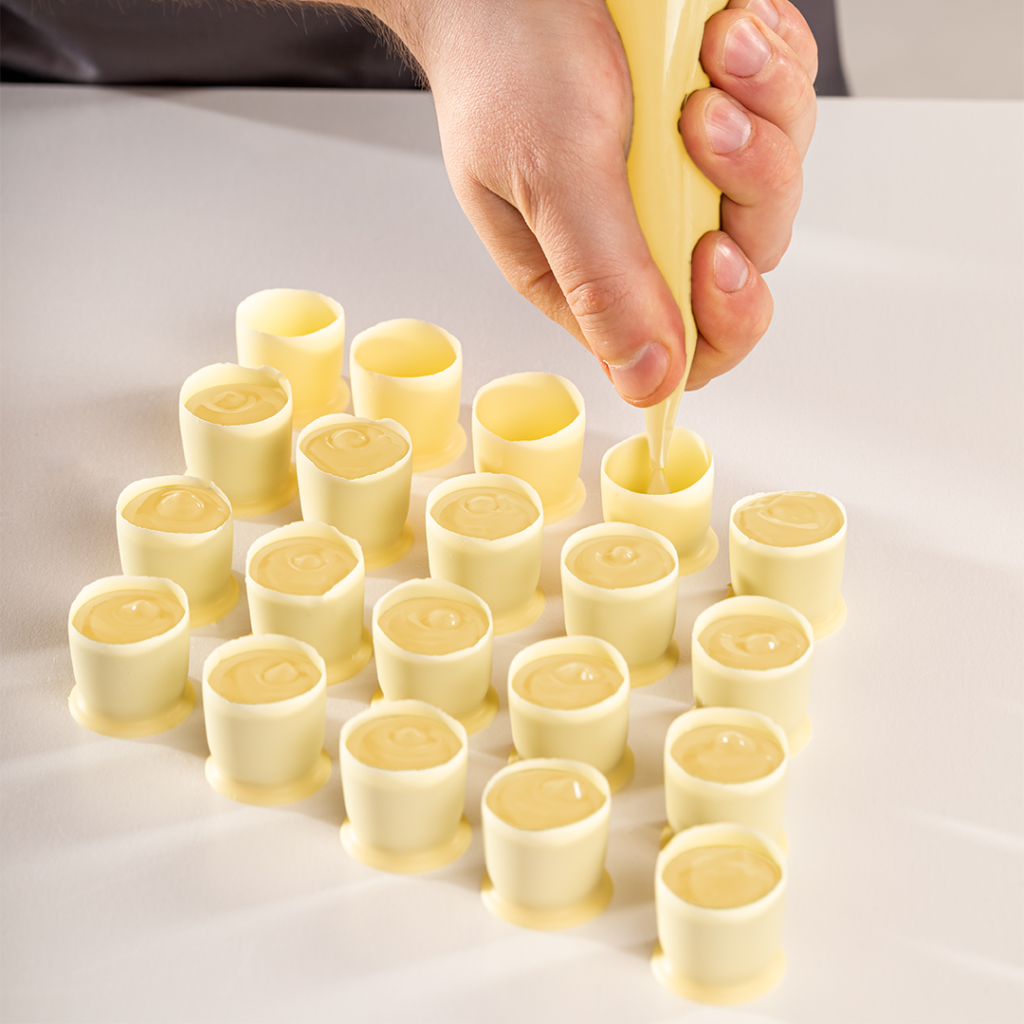
White chocolate ganache is essentially an emulsion of white chocolate and heavy cream. The ratio you choose and the temperature you work at determines whether it pours, spreads, or holds firm under fondant. This guide covers the main ratios, how to actually make it, and what to do when something goes wrong.
What Makes White Chocolate Ganache Different from Regular Ganache?
White chocolate contains no cocoa solids – only cocoa butter, milk solids, and sugar. That changes a few things in practice.
Cocoa butter percentage is what determines how firm the finished ganache will be. A professional couverture sitting at 29% cocoa butter (like Barima Artisanal white chocolate) will set reliably at a 3:1 ratio. A supermarket bar at around 20%? The same ratio might stay stubbornly soft even after hours in the fridge. The percentage matters more than the brand name on the packaging.
White chocolate is also more heat-sensitive than dark. It burns at a lower temperature, seizes more easily, and when it splits, it splits fast. You can work with it perfectly well once you know that – it just means low heat and a little more patience than you’d give a dark ganache. For a broader perspective on different types of chocolate bases, including dark and milk versions, check out The Secrets of a Perfect Chocolate Ganache on our blog.
One thing worth flagging: some of white bakestable chocolate are not a good choice. They may contain stabilizers designed to help them hold their shape in cookies – which is the exact opposite of what you need here. The result is often gluey or grainy. Couverture melts the way you need them to.
What Is the Right White Chocolate Ganache Ratio?
The ideal white chocolate ganache ratio depends on your goal. There isn’t one universal number, but here is how it usually maps out:
| Use | Ratio (Chocolate : Cream) | Texture at Room Temperature |
|---|---|---|
| Glaze / Drip | 1:1 | Pourable, glossy |
| Whipped Frosting | 2:1 | Light, fluffy, pipeable |
| Cake Frosting / Filling | 3:1 | Spreadable, holds its shape |
| Under Fondant / Summer | 4:1 | Very firm, heat-stable |
White chocolate consistently needs more chocolate relative to cream than dark chocolate does. A 1:1 ratio is standard for dark ganache frosting, but with white chocolate, you’ll get something that looks fine going onto the cake – and then starts sliding within half an hour. If you’re looking for a lighter, more aerated texture for your desserts, you might also be interested in learning how to make chocolate mousse.
How to Make White Chocolate Ganache Step-by-Step?
To make a standard 3:1 ratio ganache, which is your “workhorse” for frosting and filling, you will need:
- 300 g white chocolate (bars or couverture)
- 100 ml heavy cream (min. 30% fat)
- Optional: vanilla paste, fruit purée, or liqueur.
How do you prepare it to get that silky, professional finish? It’s all about managing the emulsification and not rushing the heat.
- Chop it small: If using a bar, chop it as finely as you can. The finer the pieces, the more gently everything comes together.
- Heat the cream: Warm it over medium-low heat until it just starts to steam – small bubbles at the edge, not a rolling boil. Boiling cream will start breaking down the emulsion before you even start.
- The waiting game: Pour the hot cream over the chocolate, then set the spoon down and wait 2–3 minutes. The heat needs time to work. When you stir, go from the centre outward in small, slow circles. Don’t whisk hard – you’re not trying to add air.
- Refining: Still have lumps? 10-second bursts in the microwave or a bain-marie will sort them out. For a truly smooth texture, a quick pulse with an immersion blender works wonders.
- Crystallization: For glazing, use it warm (around 32°C). For spreading, leave it at room temperature for an hour. Just keep checking it, because the window between “perfect” and “too stiff” is shorter than it sounds.
How Do You Apply White Chocolate Ganache to Cakes?
Drip or Glaze
Warm your 1:1 ganache to around 32°C. Too warm and it runs off; too cool and the drips stop short and look lumpy. A squeeze bottle gives you much more control than a jug. If you want to colour it, use oil-based colouring only. Water-based colouring causes white chocolate to seize almost instantly.
Covering a Cake (The Secret to Sharp Edges)
Two coats, never one rushed thick one. The first is a crumb coat. Chill it for 20 minutes, then apply the second coat generously. Smooth it with a bench scraper on a turntable. If you want a really clean surface, dip the scraper in hot water, dry it, and work quickly – the warmth levels out ridges before the ganache firms up.
Once you’ve mastered the base, you can use these skills for more complex work. Learning how to make chocolate pralines is the natural next step.
What Actually Goes Wrong with White Chocolate Ganache?
Overheating is the most common problem by far. White chocolate’s cocoa butter separates easily, and when it does, the ganache turns greasy. If you catch it early, blend in a tablespoon of warm cream with an immersion blender.
Ignoring the season is another trap. A 3:1 ratio that worked in winter may not be firm enough for a summer cake. Bumping to 4:1 in warmer months is a simple fix. Also, avoid wooden spoons – wood can hold moisture, and moisture causes white chocolate to seize. A dry silicone spatula is better.
How to Flavour White Chocolate Ganache?
Because white chocolate is so neutral, it takes on other flavours cleanly:
- Aromatics: Steep lavender or Earl Grey directly in the cream as it heats.
- Pastes: Stir in pistachio paste or citrus zest after the emulsion is finished.
- Liqueurs: If you add 30 ml of Marc de Champagne, reduce the cream by the same amount so the ganache doesn’t stay too soft.
How Long Does White Chocolate Ganache Keep?
| Storage | Duration |
|---|---|
| Room temperature | Up to 2 days |
| Fridge | 5–7 days |
| Freezer | 2–3 months |
If you’re finishing a ganache cake and looking for decoration, the Barbara Decor range covers everything from Filigranes® and Blossoms to seasonal collections. For hands-on ganache technique, the Pralines and Truffles course at the Inspiration Academy goes into filling and forming in practical detail.
FAQ: Professional White Chocolate Ganache
1. Which ratio is best for a wedding cake in a warm climate?
Use a 4:1 ratio. It’s more heat-stable than buttercream and won’t “sweat” or slip under fondant during a long event.
2. Why did my white chocolate ganache turn grainy?
This is usually caused by overheating the white chocolate or using chocolate containing stabilizers.
3. Can I use water-based food coloring for ganache?
No. Water-based colors will cause the chocolate to seize immediately. Always use oil-based colorings or cocoa butter-based dyes to maintain a smooth emulsion.
